
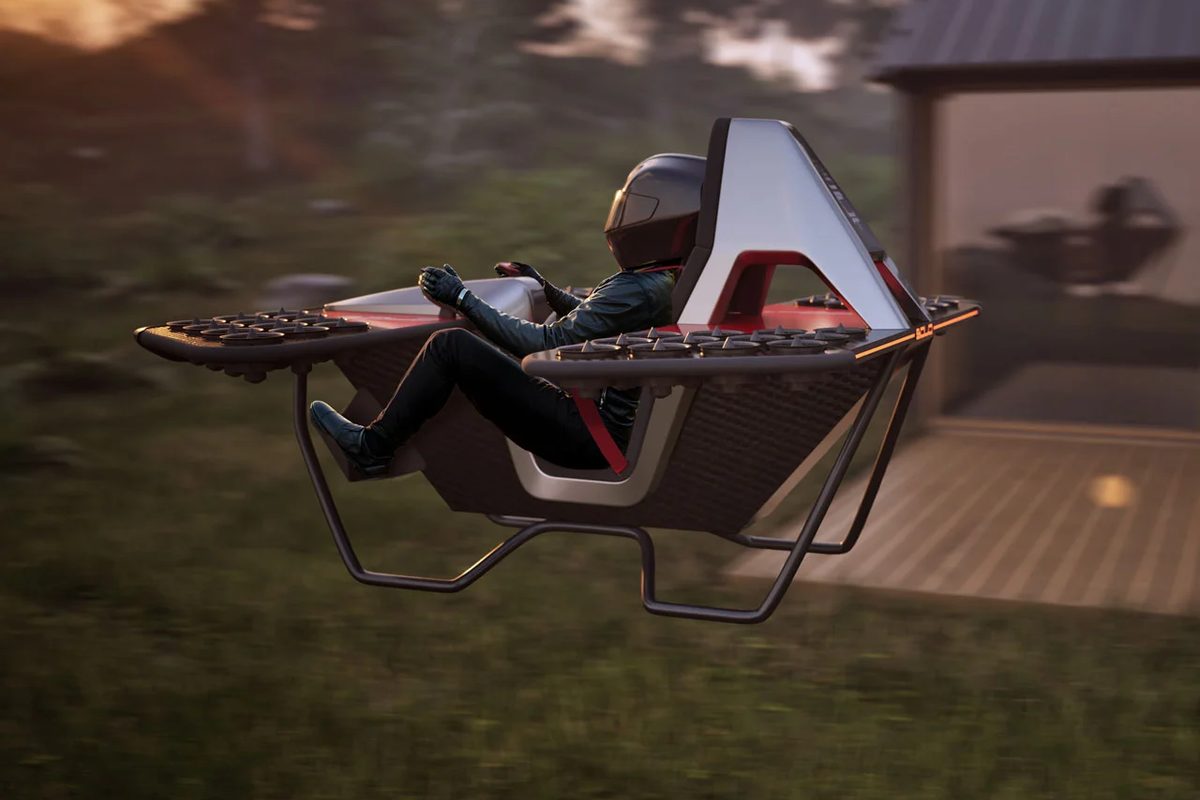
The FAA has cleared certified electric air taxis for commercial operations this summer, and LEO Flight just opened pre-orders on a single-seat electric JetBike that anyone can fly legally without a pilot's license.
The regulatory picture for electric vertical takeoff and landing (eVTOL) aircraft in the United States came into sharp focus last month. The Federal Aviation Administration (FAA) launched an accelerator program creating a direct pathway for certified eVTOL aircraft to begin carrying passengers commercially by summer 2026. China has been certifying and flying electric air taxis for nearly three years. The US is now ready to run.
At the same time, on the personal ownership side of this space, LEO Flight opened pre-orders for its Solo JetBike, a single-seat aircraft powered by a clustered electric-jet propulsion system with no propellers. The JetBike qualifies under FAA Part 103 ultralight regulations. Under Part 103, no pilot's license, no medical certificate, and no written exam are required to fly it legally. A fully refundable $999 deposit holds your place in line. The target base price is $99,900.
These two stories land in the same season, and together they describe a personal aviation market that has split into two clear lanes: one where you hail a ride through an app, and one where you own the machine. The Demo Days community is already living in both of those lanes across cars, bikes, and UTVs. Aviation is now arriving at the same intersection.

What the FAA Accelerator Program Actually Does
The FAA's accelerator program for eVTOL aircraft requires full airworthiness compliance. There are no shortcuts on type certification. What the program adds is a set of dedicated agency resources assigned to eVTOL certification reviews, defined timelines, and a clear public commitment from the FAA that it wants commercial eVTOL service flying in US airspace this year.
For Joby Aviation, this removes the last major regulatory uncertainty keeping American eVTOL operators on the sidelines. Joby has been test-flying its five-seat S4 aircraft since 2020, logged thousands of flight hours, and completed a piloted flight across San Francisco Bay and around the Golden Gate in March 2026. That flight covered the full span of the bay and circled one of the most recognizable landmarks in the country, a real-world proof of the aircraft's readiness for dense urban operations.
Joby has also locked in a booking agreement with Uber so passengers can request a flight the same way they request a car today: open the app, request, pay, arrive. Target launch markets include New York City, Los Angeles, and Dubai. The FAA's summer 2026 timeline puts direct pressure on Joby to have at least one US market live before the year closes.

What the LEO Flight Solo JetBike Actually Is
The Solo JetBike from LEO Flight sits in a completely different category from a commercial air taxi. This is personal aviation hardware designed for individual ownership and operation.
The aircraft runs on a clustered electric-jet propulsion system, completely propeller-free, carrying a solid-state battery pack. The footprint when stationary is 6.5 × 6.5 feet. A roll-hoop safety frame is built in. Flight altitude is electronically limited to approximately 15 feet, top speed is around 60 mph, and flight time per charge runs 10 to 15 minutes. Noise output is rated at approximately 80 dB. Home charging is supported.
The 10-to-15-minute flight window is worth being clear-eyed about. The JetBike suits short-range personal flight rather than cross-town commuting. It fits low-altitude sport flying on property you own or control, recreational use in open rural airspace, and early personal aviation ownership. The same early-adopter appeal that drew buyers to the first production e-bikes and electric UTVs. The FAA's B4UFLY app is the standard tool for checking airspace clearance at any specific location for Part 103 ultralight activity. Most suburban and rural areas have accessible low-altitude airspace.
Pre-orders opened in November 2025. LEO Flight lists over 100 pre-sales on its website. Buyers can reserve with a $999 fully refundable deposit on their website.

Why This Matters to Demo Days Visitors
Anyone who has spent time around Demo Days has already watched the pattern unfold. First came e-bikes. Then motorcycles. Then UTVs. Electric power kept appearing in new categories, and every time people tried it for themselves the reaction tended to be the same. Curiosity turned into real interest pretty quickly.
Personal aircraft are entering that same conversation now, and the timeline has accelerated faster than many people expected.
For years the FAA Part 103 category quietly allowed a different kind of access to flying. Instead of the long certification process tied to traditional aviation, this category has remained relatively open and simple. Historically it was filled with powered hang gliders and trikes. Interesting machines, but mostly limited to niche hobbyists. LEO Flight looked at those same rules and built a fully electric aircraft with no propeller that still fits inside that framework. The pricing lands in a range that feels familiar to the powersports crowd. The same buyer who might spend eighty to one hundred thousand dollars on a serious UTV build or a high end motorcycle suddenly finds personal flight sitting in that same conversation.
For people who attend Demo Days, that idea doesn’t feel far fetched. This audience already understands what electric drivetrains bring to the table. Instant torque, quiet operation, and machines that feel different the moment you ride them. When aviation enters that same electric ecosystem, it starts to feel less like science fiction and more like the next category joining the lineup.
Commercial aviation is developing along a similar path. Companies like Joby are building electric air taxis that most people will experience first as passengers rather than owners. With the FAA timeline currently pointing to summer 2026, there is a real chance that electric air taxi rides become available in at least one U.S. city before the next outdoor festival season wraps.
Put those pieces together and the pattern becomes pretty obvious. Personal electric aircraft entering the market at roughly the same time certified electric air taxis begin carrying passengers. It follows the same technology curve people already saw with EVs and e-bikes.
Battery development matured. Electric propulsion matured. Regulations finally caught up with the technology.
The powersports crowd already comfortable with electric machines will likely be first in line for what comes next. Some people already see where this is going. Others will understand a little later. That cycle has played out enough times now that it feels pretty familiar.

Frequently Asked Questions
Do you need a pilot's license to fly the LEO Flight Solo JetBike? No. The Solo JetBike is designed to qualify under FAA Part 103 ultralight vehicle regulations, which require no pilot's license, medical certificate, or written exam. Pilots are still responsible for understanding basic airspace rules and local regulations before flying.
What is the FAA eVTOL accelerator program? The FAA launched a dedicated accelerator program in early 2026 assigning agency resources to eVTOL aircraft certification reviews, with commercial operations targeted for summer 2026. Aircraft must still achieve full type certification. The program creates clearer review processes and defined timelines for companies like Joby Aviation and Archer Aviation.
When will Joby Aviation start flying passengers in the United States? Joby is preparing for first commercial operations in 2026 under the FAA accelerator timeline. The company has a booking agreement with Uber and has named New York City, Los Angeles, and Dubai as target markets for first service.
How does the Solo JetBike take off and land? The Solo JetBike uses a clustered electric-jet propulsion system for vertical takeoff and landing. No runway is required. The aircraft takes off and lands vertically from any flat surface large enough to accommodate its 6.5 × 6.5-foot footprint.
How much does the Solo JetBike cost, and can I reserve one now? The target base price is $99,900. Pre-orders are open at leoflight.com/order with a fully refundable $999 deposit. LEO Flight lists over 100 pre-sales on its website. Delivery timelines have not been formally updated since the original 2025 target window.
Sources | Images: New Atlas | LEO Flight, Joby Aviation, Demo Days Festival


Leave a comment
This site is protected by hCaptcha and the hCaptcha Privacy Policy and Terms of Service apply.