
Uber has partnerships with more than 25 autonomous vehicle companies globally. It has Waymo operating in Austin and Atlanta. It has Lucid and Nuro targeting San Francisco by end of year. It has Zoox moving into new cities. Partnerships are not new for Uber.
So the question worth asking is: why does this one feel different? Not just in size, but in structure.
Three things separate the Rivian deal from everything Uber has announced before.
First: the scale is categorically different.
The Waymo partnership, for all its visibility, is a regional deployment. Two cities, one provider, purpose-built hardware that Waymo controls completely. The Lucid-Nuro collaboration is targeting a single market in its first phase. These are meaningful programs, but they are pilots at the scale of tens or low hundreds of vehicles in operation.
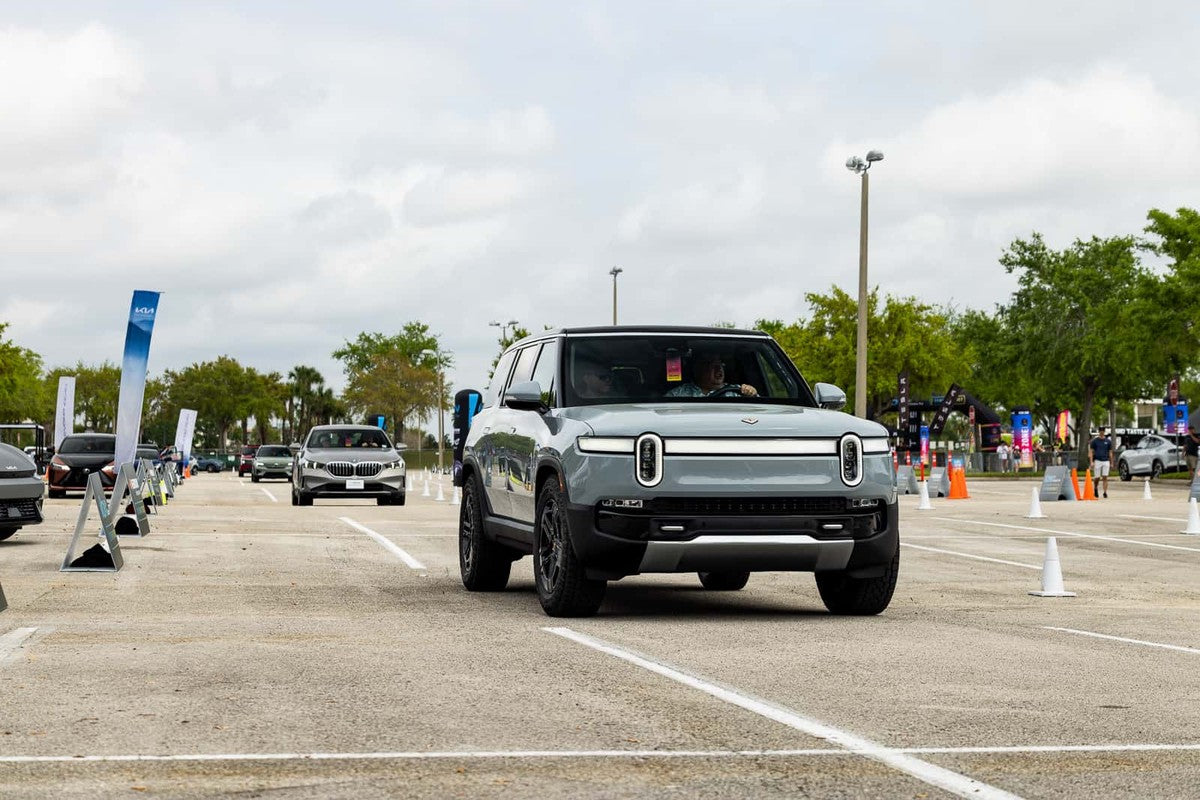
Fifty thousand vehicles across 25 cities is not a pilot. That is a fleet strategy. If Rivian and Uber hit even half those numbers, the Rivian R2 becomes one of the most widely deployed autonomous vehicle platforms in the world, not just in ride-hailing but in any sector. The production and operational complexity of managing that many autonomous vehicles across three countries is a genuinely different category of undertaking.

Second: the exclusivity architecture creates structural alignment that other partnerships don't have.
Rivian has agreed not to sell fully autonomous vehicles to Uber's direct ride-hailing competitors for a specified period. That clause is worth examining carefully.
Companies don't negotiate exclusivity protections over technology they're not confident in. And platforms don't pay for exclusivity over hardware that isn't meaningfully differentiated. The fact that both sides agreed to this structure, that Rivian accepted the constraint and Uber considered it worth paying for, tells you something real about how both parties assess the value of what Rivian is building.
The other Uber partnerships don't have this. Waymo operates on Uber in some markets and independently in others. Zoox is an Amazon company with its own agenda. The Rivian relationship is structurally exclusive in a way that makes it Uber's most committed autonomous vehicle bet, not just its largest one by vehicle count.

Third: vertical integration is the real moat, and Rivian is further along than most people realize.
This is the point that gets least coverage and matters most.
In every conventional autonomous vehicle program that has struggled, you can find the same failure mode somewhere in the stack: a camera system designed by one company, processing chips sourced from another, software written by a third team working from specifications that were finalized before the hardware was fully understood. When something breaks or underperforms, the diagnostic question becomes complicated. Whose system is it, actually?
Rivian built the vehicle, the RAP1 chips, and the autonomy software as a single product. The team that spec'd the sensor geometry worked with the team that wrote the perception algorithms. The team that defined the processing requirements worked with the team that designed the silicon. That kind of tightly coupled development produces systems that are easier to improve, faster to debug, and more capable of compounding gains over time, because every layer of the stack was designed to talk to every other layer.
Uber CEO Dara Khosrowshahi said it plainly: "designing the vehicle, compute platform, and software stack together, while maintaining end-to-end control" is exactly what attracted Uber to this specific partner over others.

There is also one more factor that none of the press coverage has focused on enough: the consumer R2 fleet is a data engine for the robotaxi program.
The retail R2, which goes on sale this spring, will begin generating real-world miles on Rivian's autonomy platform from day one. Every consumer R2 driving on public roads feeds perception data, edge cases, and environmental variance back into the same system that the robotaxi will rely on. By the time commercial deployments begin in San Francisco in 2028, Rivian will have accumulated two years of continuous data from a growing consumer fleet.
Waymo's vehicles generate excellent data, but they are purpose-built robotaxis. They don't have a consumer fleet feeding the same pipeline in parallel. That data advantage compounds over time, and Rivian is starting to build it now.
The robotaxi market is still early enough that the structural decisions being made today will define the competitive landscape for a decade. The Rivian-Uber partnership is not just large. It is designed well. That combination is rare, and it is what makes this announcement worth paying attention to beyond the headline number.
Author: Randi Bentia
Images: Demo Days Festival


Leave a comment
This site is protected by hCaptcha and the hCaptcha Privacy Policy and Terms of Service apply.