
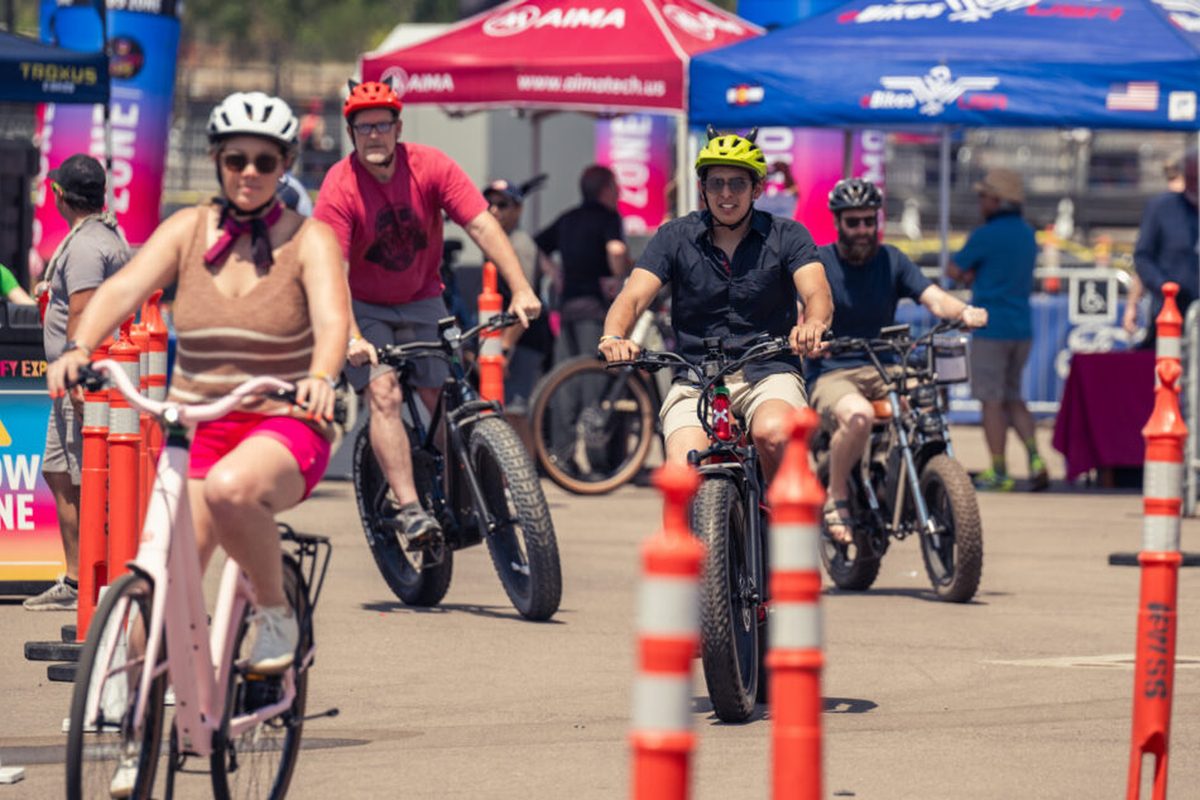
The off-road e-bike category has become one of the fastest-growing segments in all of outdoor mobility, and the numbers make that impossible to ignore.
A report from MarketsAndMarkets puts the global electric mountain bike market at $16.91 billion in 2025, with projections that have it nearly doubling to $31.96 billion by 2032.

Electric mountain bikes have quietly built one of the most serious consumer markets in all of powersports. What started as a niche product for early adopters who wanted a little motor assist on steep trails has grown into a full-blown category with its own dedicated buyers, its own race circuits, and now, its own billion-dollar market valuation. The MarketsAndMarkets report, released in December 2025 via PRNewswire, makes it official: e-MTB is no longer a sub-category you can write off as a trend.
The $16.91 billion figure reflects the state of the market right now. The projection to $31.96 billion by 2032 represents a compound annual growth rate that puts e-MTBs well ahead of many other vehicle categories. What's driving that? A few things working together. Battery technology has improved enough that modern e-MTBs can cover serious trail distance on a single charge. Motor systems have gotten lighter and more integrated, so the bikes ride closer to a traditional mountain bike than they did just five years ago. And the price ceiling has come down enough that buyers who might have hesitated are now walking into shops and test-riding.
North American consumers have been a strong part of that story. Trail access has expanded in many regions, more bike parks are building e-MTB-specific programs, and major manufacturers, including Specialized, Trek, Giant, and several European brands with strong U.S. distribution, have all committed to expanding their electric off-road lineups. The category is no longer a side project for those brands; it's a primary focus.

What the $17 Billion Number Actually Means
Market size numbers can feel abstract, so here's some context. Seventeen billion dollars puts the e-MTB segment on par with several established vehicle categories that most people would consider mainstream. It's larger than the entire U.S. ATV market by a wide margin. It's in the same conversation as the global powersports boat segment. And it's growing at a rate that very few categories at this scale can match.
The report breaks the growth drivers into a few clear buckets. First, expanded trail access in Europe has pulled a lot of investment toward higher-end full-suspension e-MTBs. European markets remain the global leader in e-MTB adoption, which is relevant for North American manufacturers because the technology and product development coming out of European demand tends to show up in U.S. product lines within a model cycle or two. Second, the midmotor segment continues to grow. Bosch, Shimano, and Brose all supply drive systems to multiple brands, and each has been releasing updated motor units that offer more torque, better battery integration, and improved range. Third, the entry-level category has opened up considerably. Buyers who might have spent $1,800 on a traditional hardtail can now find a capable e-MTB in the $2,500 to $3,500 range.
That price compression matters a lot for consumer adoption. It shifts e-MTBs from a premium luxury purchase to a consideration that a broader household income range can access. It also pulls in riders who are newer to mountain biking and might find a motor assist more approachable as they build skills on technical terrain.

Battery and Motor Technology Are Doing the Heavy Lifting
One of the reasons the market has reached this valuation is that the hardware has caught up to what riders actually want. Early e-MTBs were heavy, had limited range, and required careful battery management on longer rides. The current generation of bikes tells a different story. Batteries in the 700 to 800 watt-hour range are now common on full-suspension trail bikes, and several manufacturers have released systems with range extender options that push usable distance past 100 miles of trail riding on lower assist settings.
Motor placement has also matured. The mid-drive format, where the motor sits at the bottom bracket and drives the crank, has become the dominant configuration for off-road use. It keeps weight centered and low, which means handling characteristics stay predictable on technical terrain. Rear hub motors, common on commuter e-bikes, have largely been phased out of the serious off-road category because the handling trade-offs were too significant for riders spending time on actual trails.
Software has become a meaningful differentiator as well. Brands including Specialized with its Mission Control app, and Bosch with its eBike Flow system, have built mobile platforms that let riders tune motor response, check battery consumption in real time, and even map rides. That connectivity layer has raised consumer expectations across the board. A buyer spending $5,000 or more on an e-MTB now expects a software experience that matches the hardware quality.

Why This Matters for Demo Days Attendees
The Demo Days Festival audience understands something that the broader consumer market is still figuring out: you don't really know if you want a vehicle until you ride one. That principle is especially true for electric mountain bikes, because the experience of a quality e-MTB on actual terrain is genuinely hard to describe and easy to underestimate from a product page or a review video.
A $17 billion market means there's real product depth to explore. Not every e-MTB rides the same, and the differences between a well-tuned mid-drive system on a quality chassis and a cheaper alternative become obvious the moment you put power down on a climb or drop into a technical descent. The best way to understand why the category is growing this fast is to feel what has improved. Range, motor response, handling balance, and pedal feel have all gotten meaningfully better across recent model years, and that progress is the story behind the market numbers.
For families, e-MTBs also represent one of the more practical entry points into off-road riding. The assist system levels the playing field between riders of different fitness levels, which means a family group of varied abilities can ride together on actual trail systems instead of sticking to flat paths. That broadened use case has been a real driver of the category's consumer expansion, and it's exactly the kind of thing you can test firsthand at a hands-on event.

Frequently Asked Questions
What is the current size of the global electric mountain bike market? According to MarketsAndMarkets, the global e-MTB market was valued at $16.91 billion in 2025. The same report projects that figure to reach $31.96 billion by 2032.
What is driving growth in the e-MTB segment? Battery capacity improvements, lighter motor systems, expanded trail access in key markets, and a broader price range have all contributed. The category has attracted buyers across a wider range of budgets than it did even three years ago, and manufacturer investment has responded to that demand.
How do electric mountain bikes differ from regular e-bikes? Trail-oriented e-MTBs use mid-drive motors, full-suspension frames, and purpose-built geometry for off-road handling. They're built around the same physics as traditional mountain bikes, with the motor adding assist rather than replacing the rider's input. Commuter and city e-bikes typically use hub motors and are optimized for pavement use.
Are electric mountain bikes legal on most trails? Trail access rules vary by location and land management agency. Many trail networks that allow traditional mountain bikes also permit Class 1 e-MTBs, which use pedal assist only with no throttle and are limited to 20 mph assist. It's always worth checking the rules for a specific trail system before riding.
What should I look for when testing an e-MTB for the first time? Pay attention to how the motor feels when you start pedaling and when you stop. A good system responds naturally and doesn't create an on-off sensation. Also pay attention to where the weight sits; a well-designed e-MTB should feel balanced through corners and on climbs, not heavy at the rear wheel.
Sources | Images: MarketsAndMarkets via PRNewswire | Demo Days Festival

Leave a comment
This site is protected by hCaptcha and the hCaptcha Privacy Policy and Terms of Service apply.