
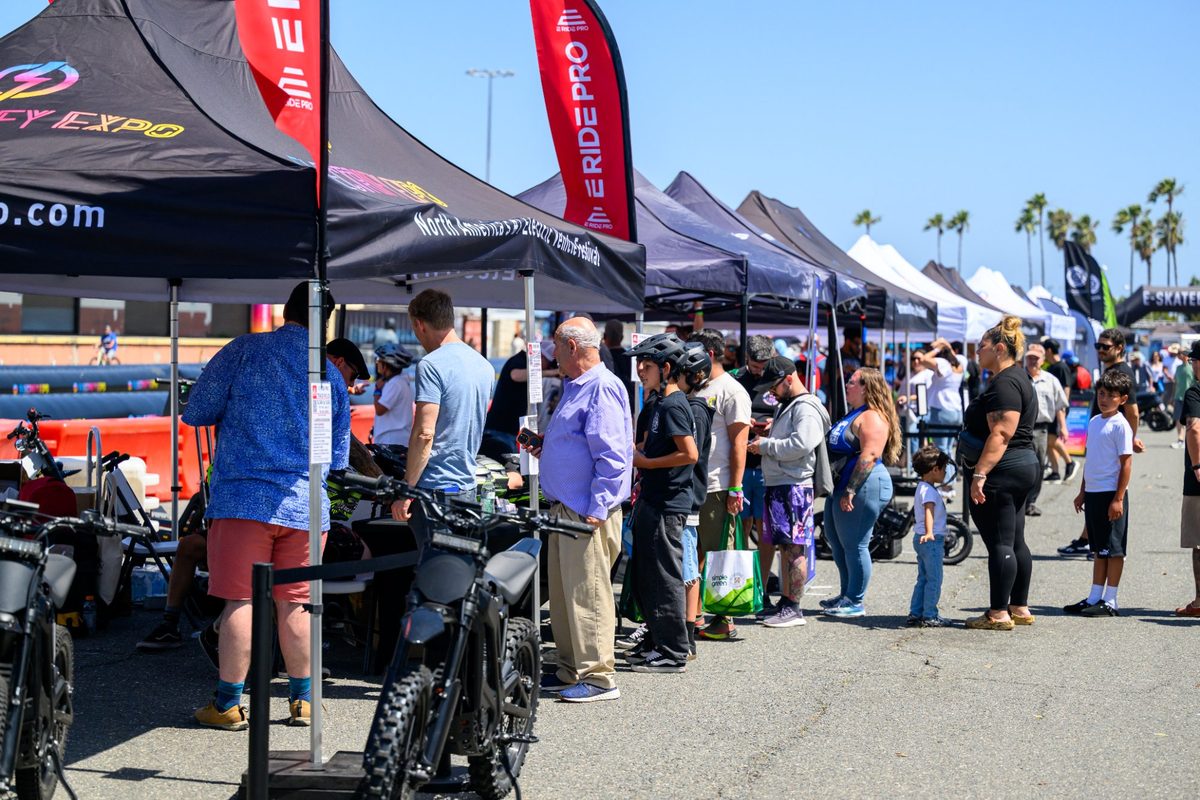
The e-bike sector is no longer a niche, it's one of the fastest-growing vehicle categories on the planet.
New research from Maximize Market Research puts the global e-bike market at $68.1 billion in 2025, with projections showing it nearly doubles to $153.39 billion by 2032 at a compound annual growth rate of 12.3%.

The numbers tell a story that anyone paying attention to trails, bike paths, and neighborhood streets already knows. E-bikes are everywhere. They've crossed over from early adopters into the mainstream, and the money flowing into the category reflects that shift. According to the report published via PRNewswire, a 12.3% annual growth rate sustained over seven years puts this category among the fastest-expanding segments in all of personal transportation.
What's driving it? A mix of things, none of them accidental. Urban commuters are replacing car trips with e-bikes. Outdoor recreation riders are using them to cover more terrain with less effort. Delivery workers are adopting them as reliable, low-cost tools. And families are buying them because the range and pedal-assist options make cycling practical for people who wouldn't otherwise ride at all. These aren't overlapping audiences, they're separate pools of demand stacking on top of each other.
The growth story also isn't just happening in one part of the world. Asia-Pacific leads in volume, with China as the largest single market. Europe is close behind, particularly in the Netherlands, Germany, and Scandinavia where cycling infrastructure supports daily use. North America is the fastest-growing region, with consumer interest accelerating alongside better product availability. That combination of sustained demand across multiple continents gives the 12.3% CAGR its staying power.

What the Numbers Actually Mean for Buyers
A market growing from $68 billion to $153 billion in seven years means manufacturers are going to keep pouring money into product development, range improvement, motor efficiency, and battery technology. That's good news for buyers. Competition at this scale doesn't just raise production numbers, it raises the floor on quality and brings prices down across categories.
The entry-level e-bike market has already shifted. Three years ago, a reliable pedal-assist commuter cost $1,500 to $2,000 at minimum. Today, strong options exist under $1,200 from brands like Rad Power, Aventon, and Lectric. On the premium end, brands like Specialized, Trek, and Giant have brought full-suspension e-MTBs to the $5,000 to $8,000 range with performance that genuinely matches the price. The middle of the market is filling in fast, and that's exactly where most buyers live.
Battery range is the spec that matters most to buyers, and it's where development dollars are going. Most current mid-range e-bikes offer 40 to 60 miles of assist per charge under normal conditions. By 2032, with the kind of investment this market is attracting, 80 to 100 mile ranges on standard configurations are a reasonable expectation. That's the threshold where range anxiety largely disappears as a barrier to adoption.

The Technology Behind the Growth
E-bike hardware has gotten genuinely good. The two dominant motor configurations, mid-drive and hub-drive, each have their place. Mid-drive motors, positioned at the crank, deliver a more natural riding feel and better climbing performance. Hub-drive motors, built into the wheel, are simpler, cheaper to produce, and easier to maintain. Bosch, Shimano, and Brose lead the mid-drive segment. Bafang dominates hub-drive. Each company is investing heavily in weight reduction, torque output, and integration with digital controls.
Battery chemistry is the other half of the equation. Lithium-ion remains standard, but cell density improvements are coming fast. Brands are moving toward integrated battery designs that sit inside the frame rather than mounted externally, which improves both weight distribution and aesthetics. Some manufacturers are beginning to work with semi-solid-state cells that promise more energy in a smaller, lighter pack. That technology won't be mainstream by next year, but it's well within the 2032 window this report covers.
Connectivity is growing too. App-connected e-bikes that let riders track range, adjust assist modes, lock the bike remotely, and receive over-the-air firmware updates are no longer limited to high-end models. That feature set is working its way down the price ladder. It makes e-bikes feel less like bicycles with motors and more like thoughtfully designed personal vehicles.

Why This Matters at Demo Days Festival
At Demo Days Festival, e-bikes are one of the most popular categories on the floor, and that's not a coincidence. The hands-on experience is exactly what most buyers need. Reading specs is one thing. Actually riding a Class 1 pedal-assist trail bike through a real-world course versus a Class 3 speed pedelec on pavement tells you everything the spec sheet can't.
The category that benefits most from in-person demos is e-bikes. The differences between motor types, assist levels, frame geometry, and weight are impossible to fully understand from a product page. You need to feel how a mid-drive handles a steep climb, or how a hub-drive responds on flat terrain, to know what actually fits your riding style. That's exactly what Demo Days Festival is built for.
With the market on track to more than double by 2032, the number of brands, models, and configurations available to buyers is going to keep expanding. That makes the demo experience more valuable, not less. When every major manufacturer is releasing new models with meaningful updates each year, having a curated space to test real bikes on real terrain is one of the best tools a buyer has.

Frequently Asked Questions
What does the e-bike market being worth $153 billion actually mean for regular buyers? It means serious money is going into product development, manufacturing efficiency, and competitive pricing. More investment at the industry level generally translates to better products at lower prices for buyers over time. The category growing this fast also means more variety, more retail access, and broader dealer networks.
What's the difference between the e-bike classes, and does it matter when buying? Yes, it matters. Class 1 provides pedal assist up to 20 mph and is allowed on most trails and bike paths. Class 2 adds a throttle, also capped at 20 mph. Class 3 provides pedal assist up to 28 mph but may be restricted on some trails. Knowing what trails or roads you'll use most helps determine which class fits your situation before you buy.
How long do e-bike batteries typically last before needing replacement? Most lithium-ion e-bike batteries are rated for 500 to 1,000 full charge cycles before capacity begins to drop noticeably. For a rider charging twice a week, that's roughly five to ten years of regular use. Battery replacement costs typically run $400 to $800 depending on the brand and capacity.
Are North American e-bike brands competitive with European and Asian manufacturers? Increasingly yes. Brands like Rad Power Bikes (Seattle), Aventon, and Lectric have built strong reputations in the value and mid-range segments. On the premium side, Specialized and Trek, both with major North American operations, are producing e-MTBs and e-road bikes that are considered among the best globally.
Is it worth buying an e-bike now or waiting for the technology to improve? Current e-bike technology is mature enough that waiting for a major leap in the near term is not a strong reason to delay. If you have a clear use case today, the bikes available now are capable and reliable. Future improvements will come incrementally in range, weight, and connectivity, not as sudden overhauls.
Sources | Images: Maximize Market Research via PRNewswire | Demo Days Festival

Leave a comment
This site is protected by hCaptcha and the hCaptcha Privacy Policy and Terms of Service apply.