
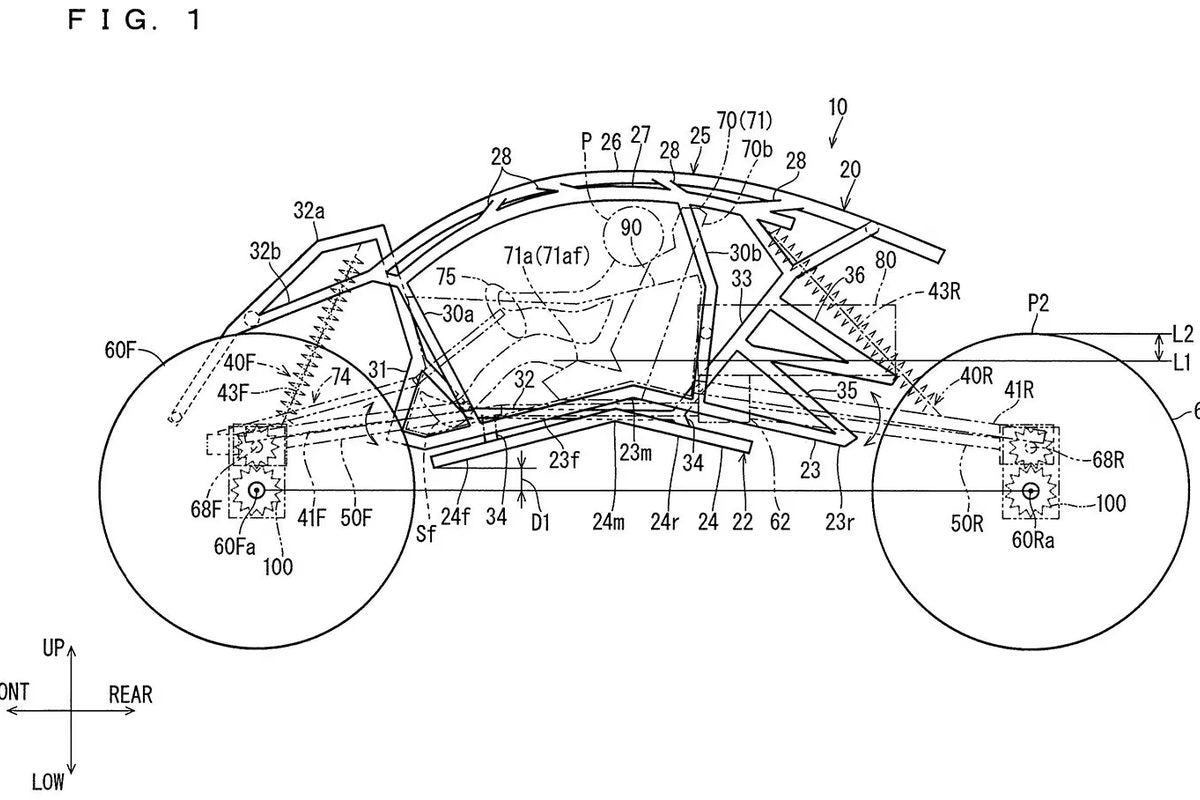
Kawasaki filed a patent for a factory-built rock bouncer UTV powered by its H2 supercharged engine, and the powersports world is paying attention.
A newly surfaced patent filing shows Kawasaki is developing a high-output UTV built around the same supercharged engine platform used in the Ninja H2, targeting the extreme off-road segment with a purpose-built factory machine.
Kawasaki has always played it differently than the rest of the UTV pack. While Polaris, Can-Am, and Yamaha have been fighting over trail-riding families and rec-sport buyers, Kawasaki has held back, watching and calculating. The brand's motorcycle engineering heritage, particularly the H2 platform, gave it a card most UTV makers simply don't have. A patent filed with the Japan Patent Office, first reported by UTV Driver, shows Kawasaki moving that card to the table in a very deliberate way.
The patent describes a UTV chassis configured specifically for rock crawling and extreme terrain use, fitted with a supercharged inline-four engine that matches the specification of the H2 motor. That engine already produces well over 200 horsepower in street-legal motorcycle trim. How Kawasaki would tune it for a heavy, low-speed off-road application is the interesting engineering question, and the patent suggests the company has thought seriously about exactly that.
What makes this different from a concept render or a wishlist spec sheet is the specificity of the patent. It includes details about chassis geometry suited for high-articulation rock crawling, four-wheel drive configuration, and power delivery systems that suggest Kawasaki is engineering this as a real product rather than a design exercise. Patent filings are not production confirmations, but manufacturers rarely invest this level of detail without serious intent to build.

What the H2 Engine Brings to Off-Road
The Kawasaki H2 engine platform is a centrifugally supercharged inline-four that Kawasaki developed entirely in-house, including the supercharger impeller. In the Ninja H2R, it makes 310 horsepower. In the street-legal Ninja H2, it produces around 228 horsepower. The key detail is that Kawasaki manufactures the supercharger itself, which means the brand has total control over how the system is tuned.
For a UTV application, raw horsepower numbers matter less than torque curve, thermal management, and durability under repeated low-speed, high-load conditions. Rock crawling is a slow-speed discipline that punishes drivetrains with relentless stress rather than speed. Getting a motorcycle-derived supercharged engine to thrive in that environment requires genuine engineering work, not just a transplant. The patent language indicates Kawasaki has been studying exactly this problem, which adds weight to the idea that this machine has been through real development cycles.
From a factory-built standpoint, a supercharged UTV from Kawasaki would occupy a position no current production machine holds. The closest competitors in the extreme UTV space are high-output naturally aspirated machines from Polaris (the RZR Pro R at 225 hp) and Can-Am (the Maverick R at 240 hp). A Kawasaki rock bouncer with forced induction would sit at the top of the production output chart, with the credibility of the H2 name already embedded in the powersports culture.

Rock Bouncers: A Niche With Real Appetite
For readers who haven't seen a rock bouncer in action, the category sits at the far edge of off-road motorsport. These machines are purpose-built to climb near-vertical rock faces, navigate boulders as large as the vehicle itself, and absorb the kind of impacts that would end a standard UTV's life in minutes. Custom-built rock bouncers have existed for years, assembled from tube-frame chassis with high-horsepower engines and massive suspension travel. The factory-built rock bouncer category is much smaller, but it exists, and buyers in this space are serious about capability over comfort.
Kawasaki entering this category with a factory-engineered machine changes the conversation for buyers who want proven, warrantied engineering rather than a custom build. It also signals that Kawasaki sees the premium off-road segment as a place worth competing in directly, not just through its KRX 1000 and KRX4 1000 lineup, which are capable trail machines but not rock bouncers by any stretch. A factory supercharged rock bouncer would be a separate product category entirely, and Kawasaki's patent suggests they understand that distinction.
The timing matters too. The UTV market has been growing consistently, with buyers at the high end of the price range willing to pay premium prices for performance they can't build themselves. A factory machine in the $30,000 to $50,000 range with genuine supercharged output would find buyers in the rock crawling and extreme rec-sport community without much difficulty.

Why This Matters for Demo Days Festival Fans
If you're the kind of person who comes to Demo Days to drive something that surprises you, a factory supercharged UTV from Kawasaki is exactly the type of machine that belongs on the demo course. The festival runs UTVs across multiple terrain types, and the rock crawling and extreme off-road sections are consistently where attendees walk away talking the longest.
A production rock bouncer from a major OEM changes what's possible in that demo environment. It's not a one-off custom build that's too fragile to hand to a first-time driver. It's a factory machine with production-spec engineering, which means event operators can put it in the hands of an enthusiast and trust it to perform. That's the category of vehicle Demo Days exists to put people inside of.
Watch for Kawasaki updates ahead of major industry events. If this machine moves from patent to prototype, it will show up somewhere public before it hits dealer floors. And when it does, the kind of hands-on trial that Demo Days specializes in will be the best possible place to understand what a supercharged factory UTV actually feels like from the driver's seat.

Frequently Asked Questions
What is the Kawasaki H2 engine and why does it matter for a UTV? The H2 engine is a supercharged inline-four developed entirely by Kawasaki for its Ninja H2 motorcycle lineup. It produces over 200 horsepower in street-legal form and uses a centrifugal supercharger that Kawasaki manufactures in-house. Applying this engine architecture to a UTV would give Kawasaki one of the highest-output factory drivetrains in the off-road segment.
Does a patent mean Kawasaki will actually build this UTV? Not necessarily. Patent filings protect intellectual property and sometimes precede production by years, or never reach production at all. However, the level of engineering detail in this particular filing, including chassis geometry and drivetrain configurations specific to rock crawling, suggests more than a theoretical exercise. Enthusiasts should watch for prototype sightings and official announcements before counting on a production timeline.
How is a rock bouncer different from a standard UTV? A rock bouncer is built for extreme low-speed terrain, primarily large rock faces and boulder fields. The key differences are suspension travel (rock bouncers typically run significantly more), chassis rigidity, drivetrain durability under high-load crawling conditions, and power delivery tuned for traction over speed. Most UTVs are trail machines; rock bouncers are for terrain where trails don't exist.
How would the Kawasaki supercharged UTV compare to the Polaris RZR Pro R or Can-Am Maverick R? The RZR Pro R makes 225 horsepower naturally aspirated. The Maverick R makes around 240 horsepower. A Kawasaki H2-based UTV with forced induction could exceed both on paper, though real-world performance depends heavily on how the engine is tuned for off-road torque delivery, thermal management, and durability rather than peak horsepower.
When might Kawasaki announce or release this vehicle? No official announcement has been made. The story is based entirely on a patent filing. If Kawasaki moves toward production, an announcement would likely come at a major industry event such as the Specialty Equipment Market Association (SEMA) show, the AIMExpo, or a dedicated Kawasaki press event. No confirmed timeline is available at this time.
Author: Randi Bentia
Source | Images: UTV Driver, Kawasaki Motors, Polaris, Can-Am | Kawasaki

Leave a comment
This site is protected by hCaptcha and the hCaptcha Privacy Policy and Terms of Service apply.